
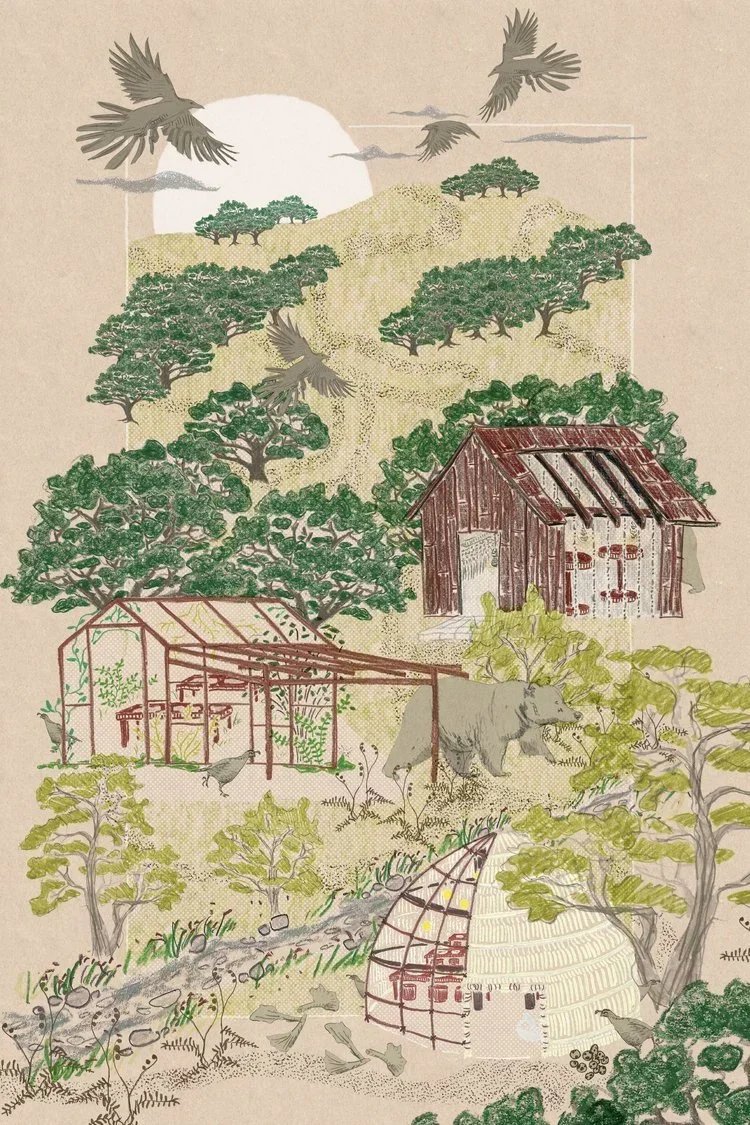
Concept Art for Ohlone Land by Hannah PaeOhlone Land
The Ohlone Land Capital Campaign aims to fund the return of ancestral East Bay land to Ohlone stewardship — for harvest, ceremony, and gathering.
mak-warép Ohlone Land Conservancy is working toward a vision of reacquisition and restoration: roughly 100 acres of ancestral East Bay land in Sunol or Fremont, denied to us since 1927 and meant for education, harvest, ceremony, and gathering. Remediated from cattle grazing, contamination, and invasive species, and restored to abundance through Indigenous-led management, this land will also become a public destination where guests can encounter the beauty, depth, and living vitality of Ohlone culture.
We know that we do not have to accept the conditions and unjust challenges imposed on us, but that we can be active forces to see healing, restoration, and positive change take hold in our beautiful homeland and the world around us.
Two Acres Is Not Enough
Of the thousands of acres taken from the Ohlone by Mission San José in the 1700s, just two acres have been returned.
Two acres is not enough to hold the full scope of cultural practice.
Two acres is not enough to support ceremonies and gatherings.
Two acres is not enough to demonstrate climate-smart land restoration.
Two acres is not enough to host the guests who want to learn.
To protect the sanctity of this sacred site, and to ensure these practices can continue, we are seeking to acquire land nearby.
What Ohlone Land Will Do
Teach
A living classroom
By hosting school groups, artist residencies, job training, and community programs, Ohlone Land will engage thousands of people directly with Indigenous land-based knowledge, the Chochenyo language, and traditional foods and ecological practices.
Feed
Food as connection
Three immersive experiences — a sun-lit tearoom, a casita lounge inspired by the Sunol Rancheria, and a tule house — will continue the culinary tradition the co-founders built into a destination.
Restore
Native gardens and trails
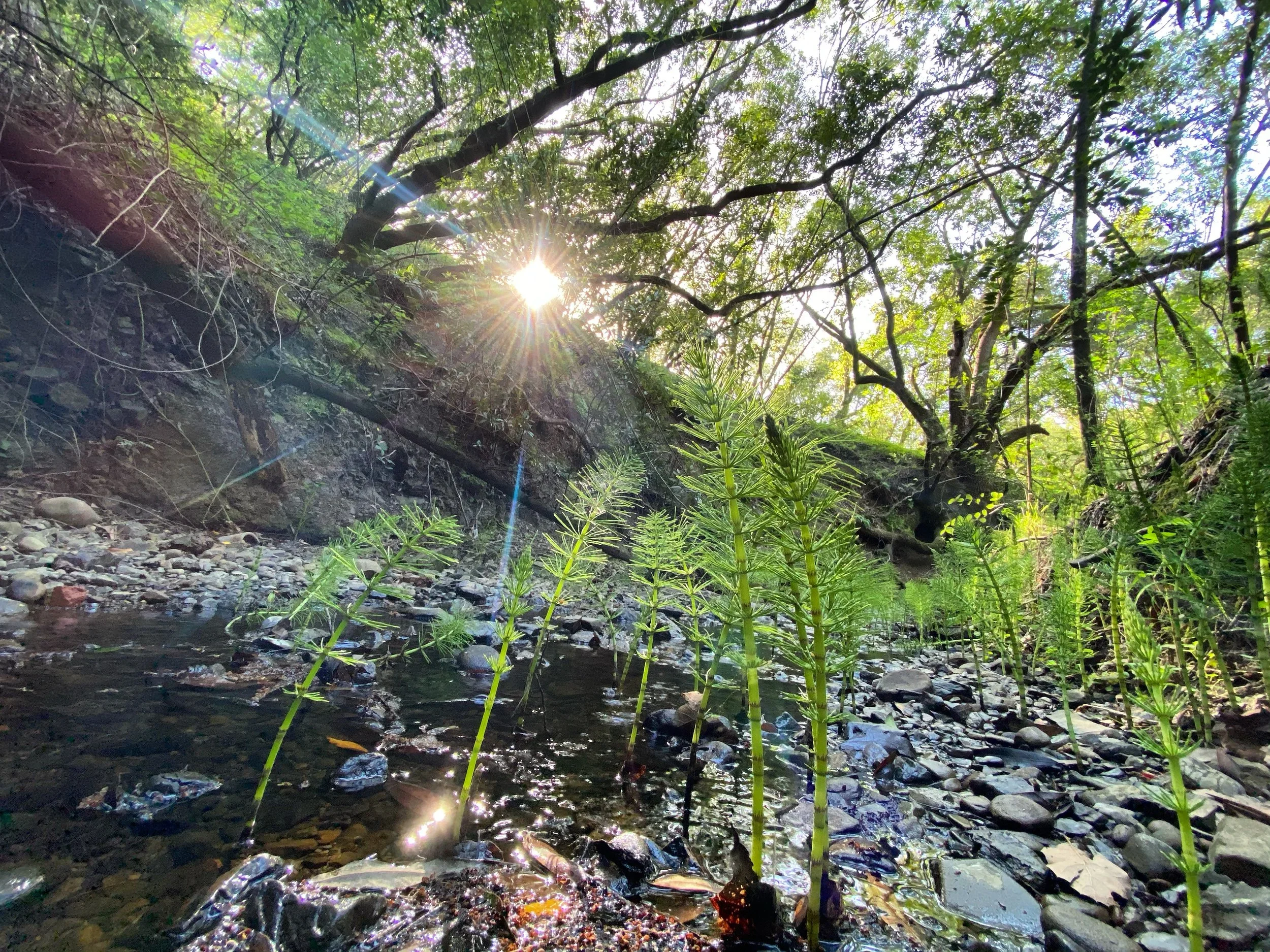
Abundant with artemisia, poppies, mugwort, ceanothus, hummingbird sage, coyote mint, yerba buena, and Indian strawberries — fragrant, sustainably managed, alive with Chochenyo.
Gather
Private community land
Reserved for Ohlone people to harvest traditional plants, conduct cultural burns, cultivate basketry materials, and celebrate together — on their own land, for the first time since 1927.
Once it has been restored, Ohlone Land will have interconnected communal spaces
A series of remediated gardens on ancestral Ohlone land will bridge three unique immersive experiences. Dense with indigenous plants such as coyote mint and mugwort, the landscape honors a pre-colonial aesthetic: a rich, abundant ecosystem shaped by traditional stewardship.
The Vision
-
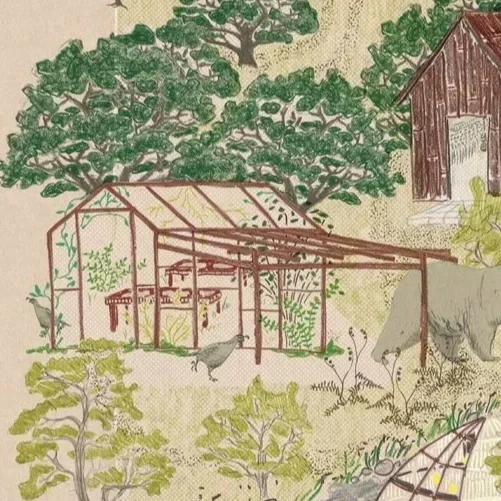
Tearoom
A sun-lit glass room
Surrounded by fragrant native plants, with gathered teas harvested fresh from the landscape, served alongside small bites — a space that spills out into sprawling gardens, so guests have tea quite literally among the flowers.
-
A Lounge
A place to sip a drink and relax
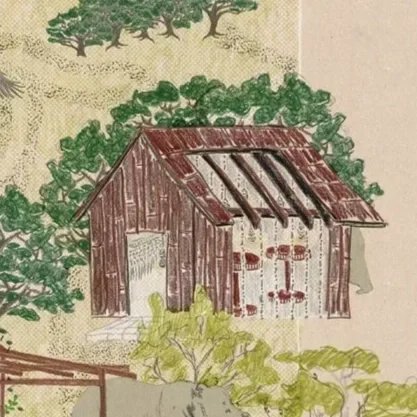
A wooden speakeasy in a slat-house casita inspired by the Sunol Rancheria of the late 1800s — filled with Ohlone baskets, fine silk tapestries, and traditional beads draped from wooden rafters in the glow of kerosene lamps.
-
Tule House
A grand, thatched hall
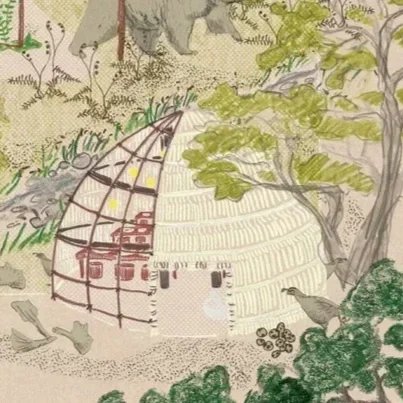
The marquee dining space — dappled light through scented reeds, a central fire illuminating redwood tables, native plants gathered sustainably before each dinner. An unparalleled land-to-table experience.
-
The Gardens
Remediated gardens, dense with coyote mint, mugwort, and other indigenous plants, connect the three spaces: a landscape shaped by traditional stewardship, honoring a pre-colonial abundance. Abalone and clamshell pendants hang from illuminated trees, and the sounds of the land and the Chochenyo language move quietly through the grounds. It is a place built to hold the dignity of the world we descend from.
-
Private Community Land
Behind these public spaces, acreage is reserved for Ohlone people alone: land to harvest traditional plants, hold cultural burns, cultivate basketry materials, and celebrate our culture privately and safely, access we have not had since the federal government disenfranchised us from the Sunol Rancheria in 1927, the same year UC Berkeley erroneously declared us extinct.
-
Education Center
Our education center will encompass state-of-the-art classrooms in which we will host group visits for learners of all ages, as well as studios for artists in residence.
The Campaign
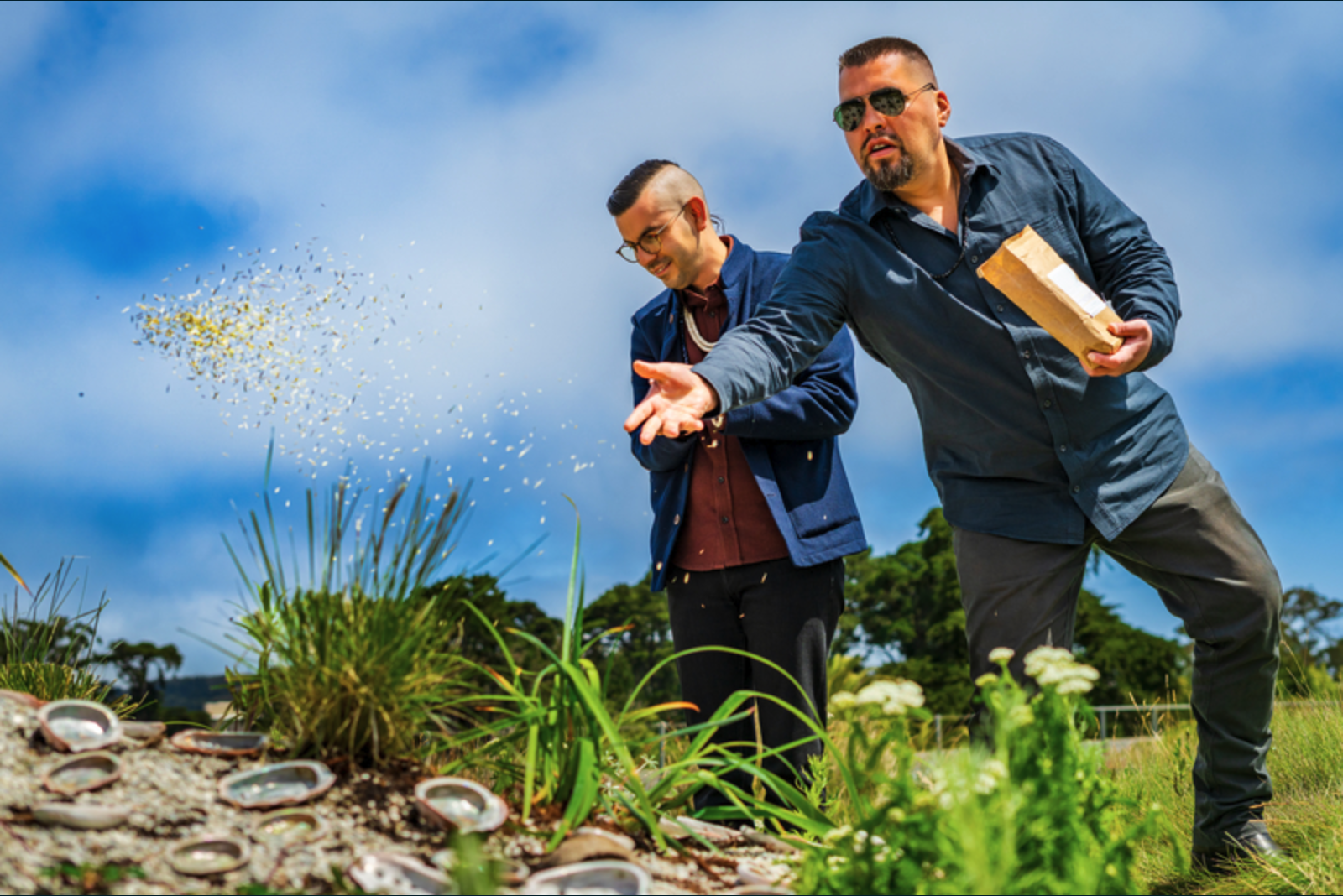
$15 million. That is what it will take to acquire, build out, and program Ohlone Land.
"Ohlone Land" was formally inaugurated in 2023, when the California Academy of Sciences launched a fundraising campaign on our behalf. Since then, $1.5 million has been raised, with inaugural support from Waverley Street Foundation, Stupski Foundation, the California Academy of Sciences,
and Fidelity Charitable.
Their approach integrates cultural restoration, ecological care, and wildfire resilience in ways that offer meaningful, long-term benefits to both Ohlone communities and the broader region.
- Emiliano Martinez, General Counsel, Waverley Street Foundation
The Invitation
Your support makes this possible.
An offering to the Ohlone Land Capital Campaign is an investment in the return of ancestral land to Ohlone stewardship, in the restoration of one of the Bay Area’s most significant ecosystems, in the preservation of a living culture, and in a future where the Ohlone people — who have always been here — have a permanent place to gather, to teach, to heal, and to be home.